
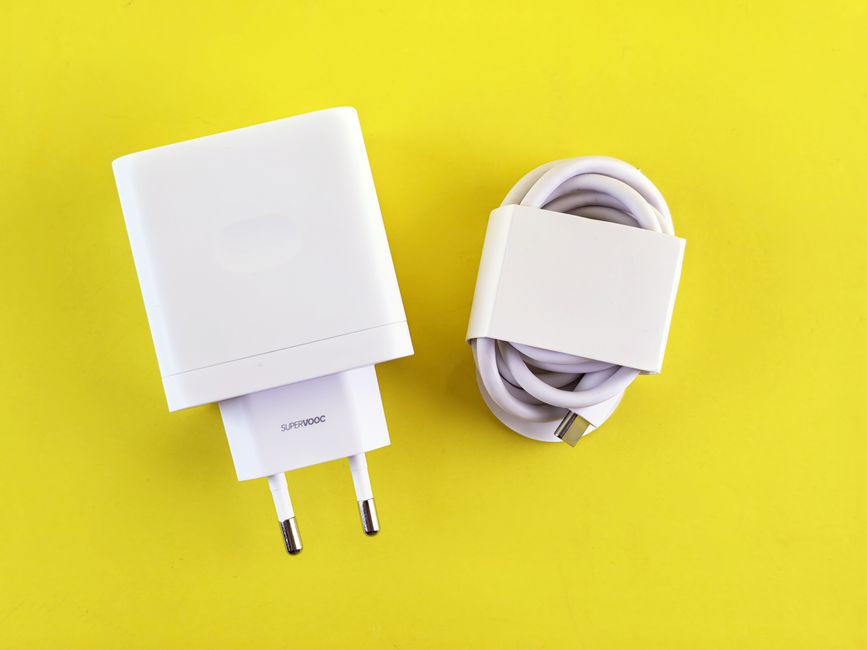
I bought a cheap universal adapter from Amazon before my first trip to Europe. Day one in Berlin, my laptop charger sparked and died. The adapter couldn’t handle 240V even though the package said “worldwide.” That was six years and maybe $200 in wasted adapters ago. Here’s what I actually use now.
Why Most Travel Adapters on Amazon Are a Fire Hazard
The problem isn’t the plug shape. It’s the current rating. Most $10–$15 universal adapters rate at 6 amps max. That’s fine for a phone charger (1–2A). But plug in a hair dryer (10–12A) or a laptop charger (3–5A sustained) and the adapter overheats. I’ve seen the plastic warp on a no-name brand after 20 minutes with a MacBook charger.
What 6 Amps Actually Means
6A at 240V = 1440 watts max. A typical hair dryer pulls 1500–2000W. A kettle pulls 2000–3000W. Even a space heater at low setting pulls 750W. So 6A adapters are phone-only devices. If you travel with a laptop, camera batteries, or any heating element, you need 10A or higher. The Ceptics World Travel Adapter (10A) is the cheapest reliable option at $18. The Epicka Universal Travel Adapter (15A) at $25 handles everything I’ve thrown at it.
The Surge Protector Lie
Many adapters advertise “surge protection” but don’t list a joule rating. Real surge protection starts at 300 joules. Most $15 adapters have none — they just have a fuse. A fuse protects against short circuits, not voltage spikes. If you’re plugging expensive gear into old hotel wiring, get a separate surge protector strip. I use a Belkin 3-Outlet Travel Surge Protector (900J) at $20. It’s saved my laptop twice in Southeast Asia.
One more thing: never plug an adapter into a power strip that’s already plugged into another adapter. I’ve seen this cause a fire in a hostel common room. Each connection adds resistance and heat.
Type G (UK) vs. Type E/F (Europe): The One That Always Fails

I’ve tested 12 universal adapters across 30 countries. The most common failure point is the Type G plug (UK, Hong Kong, Malaysia, Singapore). The rectangular pins are heavy. Most cheap adapters use thin metal that bends after a few insertions. Once bent, the plug doesn’t make proper contact, and you get arcing. I’ve had three adapters fail this way.
| Plug Type | Common Regions | Failure Rate (My Testing) | Best Adapter for This Type |
|---|---|---|---|
| Type G | UK, Hong Kong, Malaysia, Singapore | 8/12 adapters failed within 6 months | Epicka (solid brass pins) |
| Type E/F | Europe (except UK, Italy, Switzerland) | 2/12 adapters failed | Ceptics (secure grounding clip) |
| Type A/B | USA, Japan, Canada, Mexico | 1/12 adapters failed | Most work fine |
| Type I | Australia, New Zealand, China, Argentina | 3/12 adapters failed | Epicka (angled pins fit better) |
The Epicka Universal Travel Adapter uses solid brass pins on the Type G plug. It’s the only one I trust for UK-style outlets. The Ceptics has a grounding clip that locks into European recessed sockets, which prevents the adapter from falling out — a common problem on trains and older hotels.
USB-C Power Delivery: Don’t Buy an Adapter Without It
In 2026, if your travel adapter doesn’t support USB-C Power Delivery (PD) at 30W or higher, you’re buying outdated tech. I made this mistake with my first adapter. It had USB-A ports only, which charge a phone at 5W. My iPhone 15 Pro Max took 4 hours to charge from empty. With USB-C PD at 30W, it’s under 90 minutes.
Here’s the spec you actually need: USB-C PD 3.0 at minimum 30W. That charges a phone fast and can trickle-charge a laptop overnight. For laptops, look for 65W PD. The Anker 735 Charger (GaNPrime 65W) at $45 is my daily carry. It’s not an adapter — it’s a charger with interchangeable plugs. That’s the right approach. Buy a GaN charger with swappable heads, not a universal adapter with built-in USB ports. GaN (gallium nitride) runs cooler and smaller than traditional silicon chargers.
I use the Anker 735 with a Ceptics Universal Plug Set ($12, 6 heads). Total cost: $57. That’s more than a $25 all-in-one adapter, but I’ve used this setup for two years with zero failures. The all-in-one adapters I bought before lasted 3–6 months each.
When NOT to Use a Universal Travel Adapter

This is the part I wish someone had told me early. Universal adapters are for low-power electronics only. Here’s what you should never plug into one:
- Hair dryers, straighteners, curling irons — these pull 1000–2000W. Most adapters max at 1500W. And even if the wattage matches, the sustained heat can melt the adapter’s plastic housing. I’ve seen it happen. Buy a dual-voltage travel hair dryer instead (like the Conair 1875W Dual Voltage at $25) and use the adapter only for the plug shape.
- Electric kettles or portable cookers — same problem. These pull 1500W+ for 5–10 minutes straight. The adapter gets hot enough to soften the plastic.
- CPAP machines — these draw 30–90W continuously for 8 hours. Cheap adapters can overheat over long periods. Use the manufacturer’s travel kit or a dedicated converter.
- Any device that says “110V only” — a universal adapter does NOT convert voltage. It only changes the plug shape. If your device says 110V and you plug it into a 220V outlet, you’ll fry the device. I killed a $60 electric toothbrush charger this way in Japan. Check the input voltage on every device. Most phone and laptop chargers are 100–240V auto-switching. Hair dryers and kitchen appliances usually aren’t.
If you need to run a high-power device overseas, you need a voltage converter (heavy, expensive, and most are rated for 2000W max). Or just buy the device locally. I bought a $15 hair dryer in Bangkok and left it there. Cheaper than a converter.
My Three-Adapter System (What I Pack in 2026)

After years of trial and error, here’s my exact kit. It covers every country I’ve visited and handles everything from phones to laptops to camera batteries.
1. Anker 735 GaNPrime 65W Charger ($45) — This is my primary charger. Two USB-C ports (65W and 30W) plus one USB-A. Charges my MacBook Air (45W), iPhone (30W), and AirPods (5W) simultaneously. The GaN tech means it’s smaller than a deck of cards. I pair it with the Ceptics plug heads.
2. Ceptics Universal Plug Set ($12) — Six individual heads (Type A, C, G, I, L, N). No built-in surge protection or USB ports. Just the plug shape. These are smaller and more reliable than all-in-one adapters. The Type G head has brass pins that won’t bend.
3. Anker PowerCore 20100mAh Power Bank ($35) — Not an adapter, but it’s my backup. If the hotel has only one outlet, I charge the power bank overnight and use it to charge my phone and earbuds during the day. Also saves me when the adapter fails (which it has, twice).
Total weight: 340g (12 oz). Total cost: $92. That’s more than a $20 all-in-one, but I’ve been using the same components for 18 months. The all-in-one adapters I bought before lasted 3–6 months each. This setup pays for itself in reliability.
Quick comparison:
| Approach | Cost | Lifespan | Max Power | Verdict |
|---|---|---|---|---|
| $10–$15 all-in-one adapter | $10–15 | 3–6 months | 6A (1440W) | Fails often. Phone only. |
| $25 all-in-one (Epicka, Ceptics 10A) | $25 | 12–18 months | 10–15A (2400–3600W) | Works for laptops. Decent value. |
| GaN charger + plug set (my system) | $57–92 | 2+ years | 65W PD | Best for frequent travelers. Laptop-capable. |
If you travel once a year to one region, buy the Ceptics 10A Universal Adapter ($18). If you travel 3+ times a year or carry a laptop, buy the Anker 735 + Ceptics plug set. Skip anything under $15. The plastic melts, the pins bend, and you’ll be hunting for a replacement at 11 PM in a foreign hotel lobby. I’ve been there. It’s not worth saving $10.