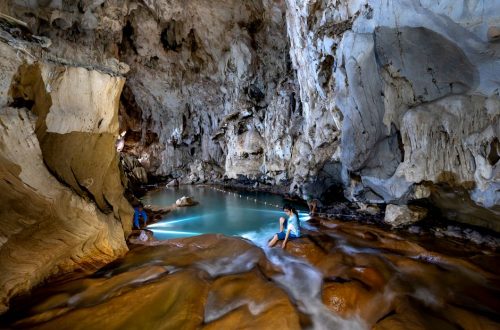

Most people think any structured baby carrier works on a trail. That’s wrong. A carrier that feels fine walking around a mall will destroy your lower back after 90 minutes on uneven terrain. The hip belt matters. The shoulder strap padding matters. The fabric breathability matters. And most importantly, the weight distribution system matters more than the brand name stitched on the front.
If you’re planning hikes with an infant, you’re really choosing between two carriers that dominate the structured carrier market: the Ergobaby Omni 360 (typically $180) and the Baby Tula Explore (typically $159-$179). Both claim all-position carrying. Both claim lumbar support. Both claim to work from newborn to toddler. Only one actually holds up on a real trail with elevation gain.
I’ve used both on hikes ranging from flat rail trails to rocky switchbacks in the White Mountains. Here’s the breakdown that actually matters.
What Actually Matters in a Hiking Carrier (That Nobody Tells You)
Before comparing these two, you need to understand what separates a hiking carrier from a lifestyle carrier. The problem isn’t the baby’s weight alone — it’s how that weight shifts when YOU move. Walking on flat ground creates a predictable vertical load. Hiking uphill shifts that load backward. Hiking downhill shifts it forward and down. Side-hilling twists it. A carrier that doesn’t manage these directional forces will fatigue your traps, compress your lumbar spine, and leave you sore for days.
The Three Non-Negotiables for Trail Use
First, the hip belt must be thick enough to transfer at least 60% of the baby’s weight to your iliac crest. If the belt is thin or sits too high, your shoulders carry everything. Second, the shoulder straps need load-lifter straps at the top — those little webbing adjusters that angle the strap off your shoulder. Without them, the carrier pulls backward constantly. Third, the back panel needs genuine ventilation, not just a mesh pocket that looks breathable in product photos.
Why Weight Limits Are Misleading
Both carriers list a 45 lb weight limit. That number is useless for hiking. A 45 lb toddler in a carrier without proper load-lifter geometry will wreck you on a 2-mile incline even if the carrier technically “supports” that weight. The realistic comfortable hiking limit for both of these carriers is around 30-35 lbs for most adults. Beyond that, you need a dedicated frame hiking carrier like the Osprey Poco Plus ($330) or Deuter Kid Comfort Active ($300).
The Sweat Factor Nobody Discusses
Infants run hot. You run hot hiking. The combined body heat between your chest and the baby’s back creates a sweat zone that can make a 70°F hike feel like 90°F. The carrier’s back panel material and the baby’s position relative to your body determine whether you both finish the hike damp or drenched. This is where the two carriers diverge dramatically.
Ergobaby Omni 360 vs. Baby Tula Explore: The Spec Comparison That Matters

| Feature | Ergobaby Omni 360 | Baby Tula Explore |
|---|---|---|
| Price | $180 | $159-$179 |
| Weight (carrier only) | 1.7 lbs | 1.5 lbs |
| Hip belt padding | Thick, contoured, 4″ wide | Moderate, 3.5″ wide |
| Load-lifter straps | Yes, adjustable | No |
| Back panel | Mesh with lumbar support pad | Canvas with small mesh strip |
| Newborn minimum weight | 7 lbs (with insert) | 7 lbs (no insert needed) |
| Forward-facing position | Yes | Yes |
| Hip seat position | Yes | Yes |
| Sun hood included | Yes | Yes |
| Machine washable | Yes | Yes |
The load-lifter strap difference is the single biggest functional gap. The Omni 360 has them. The Tula Explore does not. On a flat sidewalk, you won’t notice. On a 15% grade with a 20 lb baby, you absolutely will.
Bottom line: For hiking specifically, the Ergobaby Omni 360 wins on structural support. The Tula Explore is lighter and easier to pack, but it sacrifices the adjustability that matters on real elevation.
The Lumbar Support Question: Why Your Lower Back Is the Real Test
Here’s the thing no marketing page tells you: a carrier’s lumbar support only matters if the hip belt actually sits on your hips. And hip belt fit depends entirely on your torso length. The Omni 360 has a sliding back panel that adjusts from 14″ to 19″ torso length. The Tula Explore has fixed torso length with adjustable straps only. If you’re under 5’4″ or over 6’0″, the Tula’s fixed geometry can push the hip belt up toward your waist, which defeats the entire purpose of the belt.
The Omni 360’s lumbar support pad is genuinely thick — about 1″ of dense foam that maintains its shape under load. The Tula Explore has a thinner pad that compresses noticeably after 45+ minutes with a heavier baby. I’ve done a 3-hour hike with a 22 lb baby in each. The Omni left me with mild shoulder fatigue. The Tula left me with a specific ache in the L4-L5 region that lasted two days.
But here’s the tradeoff: the Tula Explore weighs less and packs flatter. If you’re flying somewhere to hike and luggage space matters, the Tula fits in a carry-on personal item more easily. The Omni’s lumbar pad and thicker straps take up more room. For travel specifically, the Baby Tula Lite ($99) is even more packable, but it’s not a hiking carrier — don’t confuse the lineup.
Breathability on the Trail: The Sweat Test
The Omni 360 uses a mesh back panel that covers most of the carrier’s surface area. The Tula Explore uses a cotton-canvas blend with a small mesh strip near the top. On a 75°F day with moderate humidity, the difference is stark. The Omni’s mesh allows actual airflow between your chest and the baby. The Tula’s canvas traps heat. After an hour, the baby’s back in the Tula was damp. In the Omni, she was warm but dry.
However, the Tula’s cotton canvas is softer against the baby’s skin and doesn’t cause the same friction marks that synthetic mesh can. For a newborn with sensitive skin, the Tula’s fabric is gentler. But for hiking in anything above 70°F, the Omni’s breathability is worth the tradeoff.
If you hike in cooler climates — Pacific Northwest, New England fall, Scottish Highlands — the breathability gap narrows. The Tula’s canvas actually provides a bit of insulation that’s welcome in 50-60°F conditions. But if your hiking involves any heat, the Omni is the clear pick.
When to Buy Each One (And When to Buy Neither)
Buy the Ergobaby Omni 360 if you hike more than twice a month, carry a baby over 18 lbs, have a torso length outside the 16-18″ average range, or hike in warm weather. The load-lifter straps and lumbar pad are not marketing gimmicks — they’re functional differences you feel after mile two. At $180, it’s the better value for serious trail use despite the higher upfront cost.
Buy the Baby Tula Explore if you’re primarily a city traveler who occasionally does short, flat walks. The lighter weight and softer fabric make it more pleasant for daily use. The no-insert newborn design is genuinely convenient in the first 12 weeks. At $159, it’s cheaper, but you’re sacrificing structural support for portability.
Buy neither if your baby is over 30 lbs and you’re planning multi-hour hikes with significant elevation. At that point, get a framed carrier. The Osprey Poco Plus has a built-in sun shade, storage compartment, and a frame that transfers weight to your hips better than any soft structured carrier can. The Deuter Kid Comfort Active has similar features at a slightly lower price. These are hiking backpacks with a baby seat, not baby carriers you can hike in. The difference matters.
And one more thing: never hike with a baby in a forward-facing position. Both carriers allow it, but forward-facing on a trail puts the baby’s weight too far from your center of gravity and exposes their face to branches, sun, and wind. Inward-facing only on any hike with obstacles or elevation.
Final Verdict

- Best for actual hiking: Ergobaby Omni 360 — load-lifters, real lumbar pad, mesh back panel, adjustable torso length
- Best for travel + occasional short walks: Baby Tula Explore — lighter, softer fabric, packs smaller, no newborn insert needed
- Best for babies over 30 lbs on real trails: Osprey Poco Plus or Deuter Kid Comfort Active — framed carriers only
- Skip both if: you only need a carrier for airports and city sidewalks — the Tula Lite or a simple ring sling is cheaper and easier
This is not financial advice. But if you’re spending $160-$180 on a carrier you plan to hike in, buy the one with load-lifter straps. Your lower back will send you a thank-you note after the first real climb.