I spent 14 days eating my way from Hanoi to Ho Chi Minh City. 22 bowls of pho, 8 banh mi, and countless plates of bun cha later, I can answer the question everyone asks: was the pho really that good? Yes. But not all bowls are equal, and the hype hides some important trade-offs.
What Makes Authentic Pho Different From What You Get at Home
Before I left, I thought I knew pho. I’d eaten it at Pho 24 in London and at a few US chains. I was wrong.
The broth is the star. In Vietnam, a proper bowl starts with beef bones (usually marrow and knuckle), charred onion, ginger, star anise, and cinnamon. They simmer for 8–12 hours. No MSG powder. No shortcuts. The result is a clear, amber liquid that tastes like beef and spice — not salt and fat.
Broth Clarity vs. Richness
Northern pho (Hanoi style) keeps the broth light and clear. Southern pho (Saigon style) adds more sugar and sometimes a darker, richer stock. I preferred the Northern version for its purity. The broth at Pho Thin in Hanoi (13 Lo Duc Street) was so clean I could taste the individual spices. Cost: 50,000 VND ($2.10).
Noodle Texture Matters More Than You Think
Fresh rice noodles are soft but not mushy. They should slide apart easily. The noodles at Pho Gia Truyen (49 Bat Dan Street, Hanoi) were perfectly chewy — a texture I’ve never experienced from dried noodles. Dried noodles, common in export pho, turn gluey after 3 minutes in hot broth.
Hanoi vs. Ho Chi Minh City: Two Completely Different Pho Cultures
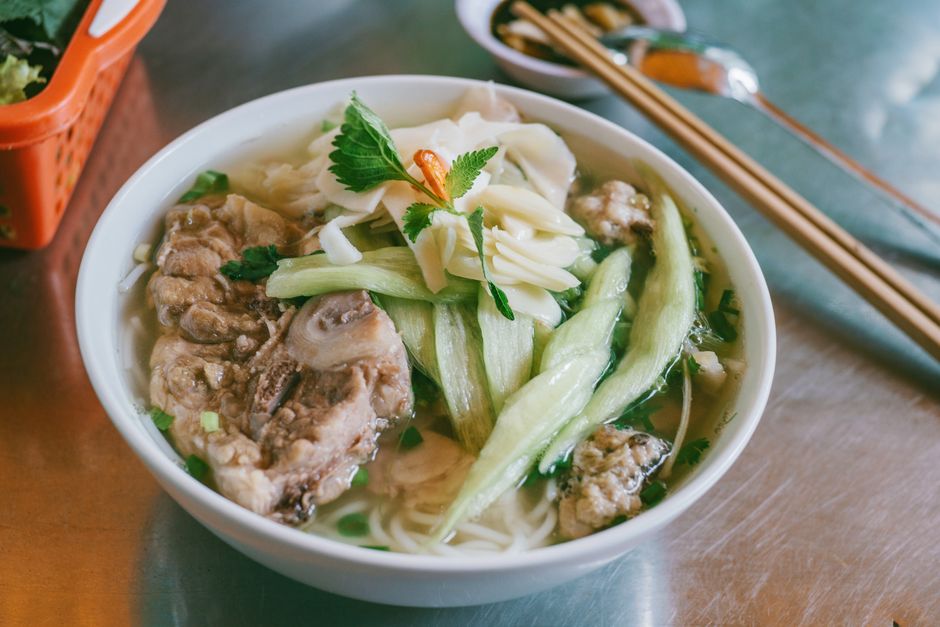
This is the biggest surprise for most travelers. Pho in the north and south are almost different dishes.
| Feature | Hanoi (Northern) | Ho Chi Minh City (Southern) |
|---|---|---|
| Broth base | Clear, lightly seasoned | Darker, sweeter, heavier on fish sauce |
| Noodles | Wide, flat, soft | Thinner, sometimes round |
| Beef cuts | Sliced raw (added at table) | Brisket, tendon, tripe (pre-cooked) |
| Herbs served | Minimal: scallion, cilantro | Lots: basil, bean sprouts, sawtooth herb, lime |
| My rating | 9/10 | 7/10 |
If you only have one bowl in Vietnam, make it in Hanoi. The broth is more complex and less cluttered by toppings. In HCMC, I found the sweetness overwhelming after three bowls.
Three Bowls That Changed My Mind About Pho
Most pho is good. These three were unforgettable.
Pho Thin, Hanoi — The Egg and Pork Twist
This place adds scrambled egg and stir-fried pork to the broth. Sounds wrong. Tastes incredible. The egg thickens the broth into a silky, almost creamy texture. 50,000 VND ($2.10). Go before 9am or wait 30 minutes.
Pho Hoa, Saigon — The All-Beef Experience
At 260 Pasteur Street, this 50-year-old joint serves pho with five cuts of beef: brisket, flank, tendon, tripe, and raw eye round. The broth is darker and sweeter than Hanoi, but the variety of textures makes it worth the trip. 65,000 VND ($2.70).
Pho Bat Dan, Hanoi — The Queue Is Worth It
This place has been open since the 1960s. The broth simmers overnight over charcoal. You sit on tiny plastic stools on the sidewalk. The beef is sliced paper-thin and cooks in 30 seconds from the broth heat. 55,000 VND ($2.30). Bring cash and patience.
The One Mistake Most Tourists Make When Eating Pho
They add too many condiments. I watched a German tourist dump hoisin sauce, sriracha, lime, and bean sprouts into his bowl before tasting it. He ruined the broth.
Here’s the rule: Taste the broth first. Then add one thing at a time. Northerners rarely use hoisin. They add a squeeze of lime and maybe a slice of chili. That’s it. The broth is the point — not the toppings.
Another mistake: ordering pho for dinner. In Hanoi, pho is a breakfast dish. Most good shops close by 10am. The evening pho is often reheated from the morning batch. I learned this the hard way at 7pm — the broth was cloudy and tasted flat.
Beyond Pho: Three Dishes That Rival It in Vietnam
Pho gets the glory. But these dishes deserve equal attention.
Bun Cha — The Grilled Pork That Beats Pho
At Bun Cha Huong Lien (24 Le Van Huu, Hanoi) — the same spot Obama visited with Anthony Bourdain — you get charcoal-grilled pork patties and belly slices served in a sweet-savory dipping broth. You dunk rice noodles and herbs into the bowl. Cost: 60,000 VND ($2.50). I ate it three times in four days.
Banh Mi — The $1.50 Sandwich That Changed Lunch
The best banh mi I found was at Banh Mi Huynh Hoa in HCMC (26 Le Thi Rieng). It’s loaded with cold cuts, pate, pickled daikon, cucumber, and a runny egg. The bread is crispy on the outside, airy inside. 47,000 VND ($2.00).
Banh Xeo — The Crispy Crepe You Eat With Your Hands
This sizzling rice flour crepe is stuffed with shrimp, pork, and bean sprouts. You wrap pieces in lettuce and dip in nuoc cham. The best I had was at Banh Xeo 46A in HCMC (46A Dinh Cong Trang). 35,000 VND ($1.50).
When Pho Isn’t Worth the Hype
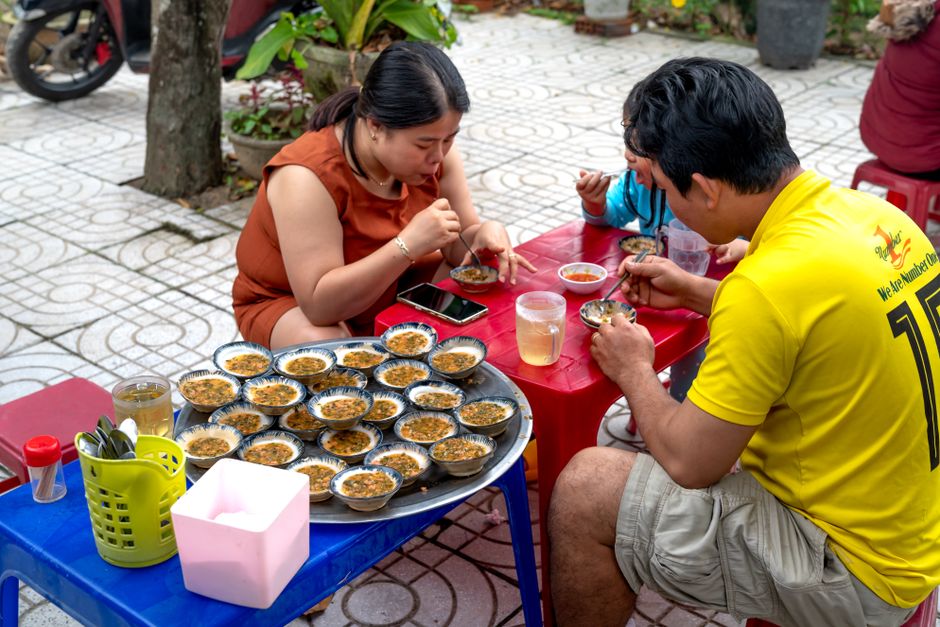
I’ll be honest: three of my 22 bowls were disappointing. Here’s when to skip it.
- Tourist street stalls in HCMC’s backpacker area (Pham Ngu Lao). The broth is pre-made from powder. The beef is tough. You’ll pay 80,000 VND for a bowl that’s worse than what you get at a mid-range Vietnamese restaurant abroad.
- Late-night pho in Hanoi. After 10pm, most pho shops serve a second-rate broth made from bones that have been boiled all day. It tastes greasy and metallic.
- Vegetarian pho. Without beef bones, the broth lacks depth. The mushroom-based versions I tried were watery and bland. Stick to other Vietnamese vegetarian dishes like com tam (broken rice) or goi cuon (fresh spring rolls).
The best pho I had cost $2.10. The worst cost $3.00. Price and quality do not correlate in Vietnam. Follow the locals — eat where the plastic stools are small and the queue is long.
Final Verdict: Should You Plan a Trip Around Vietnamese Food?
Yes. But don’t make it just about pho. The real magic of Vietnamese cuisine is the variety — a different noodle soup for every region, a sandwich that costs less than a coffee, and a street food culture where the best meal of your life costs $2.
Pho is excellent. It deserves the hype. But the dish that made me reconsider everything was bun cha — smoky, sweet, sour, and fresh all at once. If you go to Vietnam, eat pho in Hanoi for breakfast. Then spend the rest of the day discovering what else is out there.
I’m already planning my next trip — this time to Hue for bun bo Hue, and to Da Nang for mi quang. The pho was that good. But it was just the beginning.