

How does a traveler effectively structure a multi-country European rail itinerary starting from a London terminus? This question involves more than selecting destinations on a map; it requires a technical understanding of high-speed rail corridors, booking windows, and the shifting landscape of cross-border regulations. For those departing from the United Kingdom, the journey invariably begins at London St Pancras International. From this hub, the European rail network expands into a complex web of high-speed lines, regional connectors, and burgeoning sleeper services. Navigating this system with efficiency requires moving beyond the surface-level appeal of rail travel and examining the hard data regarding transit times, ticket structures, and infrastructure capabilities.
What are the most efficient rail routes from London to mainland Europe?
The Eurostar service remains the primary artery for any train tour of Europe from the UK. Operating primarily with the Siemens Velaro e320 fleet, these trains reach speeds of 320 km/h (200 mph) once they exit the Channel Tunnel. For the logistical planner, three main direct routes from London dictate the initial phase of any tour: Paris Gare du Nord, Brussels-Midi, and Amsterdam Centraal. The transit time to Paris is approximately 2 hours and 16 minutes, while Brussels is reached in 1 hour and 53 minutes. The direct service to Amsterdam, launched in 2018, takes roughly 3 hours and 52 minutes.
Strategic planning hinges on the choice of the first hub. Paris serves as the gateway to the French TGV network, providing rapid access to Lyon, Bordeaux, and the Mediterranean coast, as well as high-speed connections to Spain via Barcelona. Brussels-Midi, conversely, functions as the northern pivot. It offers immediate transfers to the German ICE (Intercity-Express) network and the Thalys (now rebranded as Eurostar) services toward Cologne and Dortmund. For travelers targeting Central or Eastern Europe, the Brussels-Cologne corridor is statistically the most efficient path, bypassing the congestion of the Parisian metro transfers between Gare du Nord and Gare de l’Est.
Technical Transit Specifications
- London to Paris: 15+ daily departures; e320 capacity: 900 passengers; check-in requirement: 60-90 minutes.
- London to Brussels: 8-10 daily departures; key connection point for ICE 3neo trains toward Frankfurt.
- London to Amsterdam: 4 daily direct departures; avoids the previous mandatory change at Brussels for the return leg.
How do Interrail and Eurail pass costs compare to point-to-point tickets in 2024?

The financial viability of a rail tour depends on the frequency of travel and the distance covered. For a multi-stop itinerary, the Interrail Global Pass (available to UK residents) often appears to be the default choice, but data suggests that point-to-point booking can be more cost-effective under specific conditions. An Interrail Global Pass for “7 days of travel within 1 month” currently costs approximately £302 for an adult in second class. However, this price does not include mandatory reservation fees on high-speed lines in France, Italy, and Spain. These fees range from €10 to €35 per leg, which can significantly inflate the total expenditure.
Conversely, point-to-point tickets booked through operators like SNCF (France), Deutsche Bahn (Germany), or Renfe (Spain) utilize dynamic pricing. If booked 90 to 120 days in advance, a journey from Paris to Munich can cost as little as €39. In contrast, using a pass day for the same journey would cost roughly €43 (pro-rata pass cost) plus a reservation fee. The pass demonstrates its value primarily on longer, spontaneous routes or in countries with low or no reservation fees, such as Germany, Switzerland, and Austria. In these regions, a pass holder can board almost any train without additional payment, providing a level of flexibility that fixed-date tickets lack.
| Feature | Interrail Global Pass (7 Days) | Advance Point-to-Point Tickets |
|---|---|---|
| Base Price (Adult) | Approx. £302 | Varies (£250 – £600+) |
| Flexibility | High: Change plans on the day | Low: Fixed to specific train times |
| Reservation Fees | Mandatory in FR, IT, ES (€10-€35) | Included in ticket price |
| Best For | Multi-country, long-distance tours | 2-3 destination trips booked early |
What are the logistical requirements for cross-border rail travel post-Brexit?
The administrative landscape for UK travelers entering the Schengen Area has stabilized, yet it requires precise adherence to validity rules. Passports must have been issued within the last 10 years on the date of entry and must remain valid for at least three months beyond the intended date of departure. While the European Travel Information and Authorisation System (ETIAS) has faced delays, it is projected for implementation in 2025. Until then, UK citizens do not require a visa for short stays (up to 90 days in any 180-day period) but must be prepared for manual passport stamping at Eurostar terminals.
Logistically, rail travel offers a distinct advantage over aviation regarding customs and security. St Pancras International and other Eurostar terminals conduct security screenings, but the liquid restrictions prevalent in airports (the 100ml rule) do not apply. Travelers are permitted to carry liquids, including wine and spirits, within reasonable personal limits. Furthermore, luggage allowances are significantly more generous; most operators allow two large suitcases plus hand luggage per person without additional fees. However, it is essential to note that once on the mainland, regional operators like Ouigo (France) or Avlo (Spain) may impose stricter baggage size limits similar to low-cost airlines.
Key Compliance Checklist
- Passport Validity: Check the “Date of Issue”—it must be under 10 years old.
- Roaming Charges: Most UK providers have reintroduced daily fees (typically £2-£2.50) for data usage in the EU.
- Health Insurance: The GHIC (Global Health Insurance Card) or a valid EHIC remains necessary for reciprocal healthcare.
- Customs: Be aware of limits on meat and dairy products, which cannot be brought from the UK into the EU.
Which high-speed rail networks offer the best connectivity for a 14-day tour?
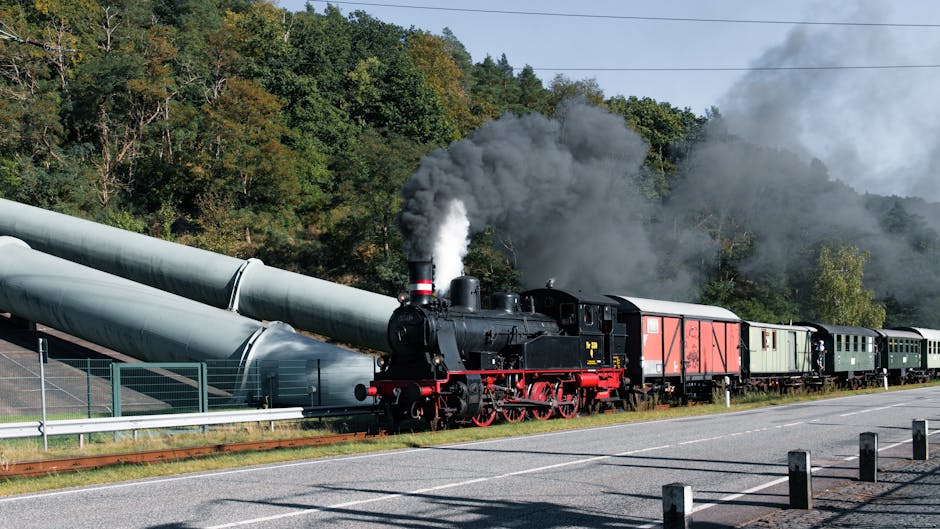
For a two-week duration, the most robust connectivity is found within the “High-Speed Triangle” of Western Europe, encompassing France, Germany, and the Benelux countries. The French TGV network is centralized around Paris, making it the most efficient system for north-south travel. For instance, the TGV Duplex (double-decker) trains can transport passengers from Paris to Marseille in just over 3 hours, covering 750 km. This infrastructure allows for an itinerary that includes London, Paris, the French Riviera, and a return via the Italian Alps with minimal time lost to transit.
Germany’s ICE network operates on a different philosophy. Unlike the point-to-point TGV, the ICE system functions as a high-frequency clock-face schedule. Major hubs like Frankfurt (Main) Hbf and Munich Hbf offer departures to almost every major German city every hour or half-hour. This makes Germany the optimal choice for travelers who prefer a “hub and spoke” model, where they stay in a central city and take day trips to surrounding regions. Furthermore, the integration of the Austrian ÖBB Railjet services provides seamless high-speed links from Munich to Vienna and Budapest, expanding the tour’s reach into Central Europe without requiring overnight travel.
In the south, the liberalization of the Spanish rail market has introduced significant competition. Travelers can now choose between the national operator Renfe (AVE), the French-owned Ouigo Spain, and the Italian-owned Iryo. This competition has resulted in increased frequency and lower prices on the Madrid-Barcelona and Madrid-Seville corridors. For a 14-day tour, a route such as London-Paris-Barcelona-Madrid-Cordoba-Seville is now logistically simpler and more affordable than at any point in the last decade.
Pro-tip: When transferring in Paris between Gare du Nord and Gare de Lyon, use the RER Line D. It is a direct two-stop journey that is significantly faster than navigating the Metro Line 4 or 5 with heavy luggage.
How do night train services currently operate across major European corridors?
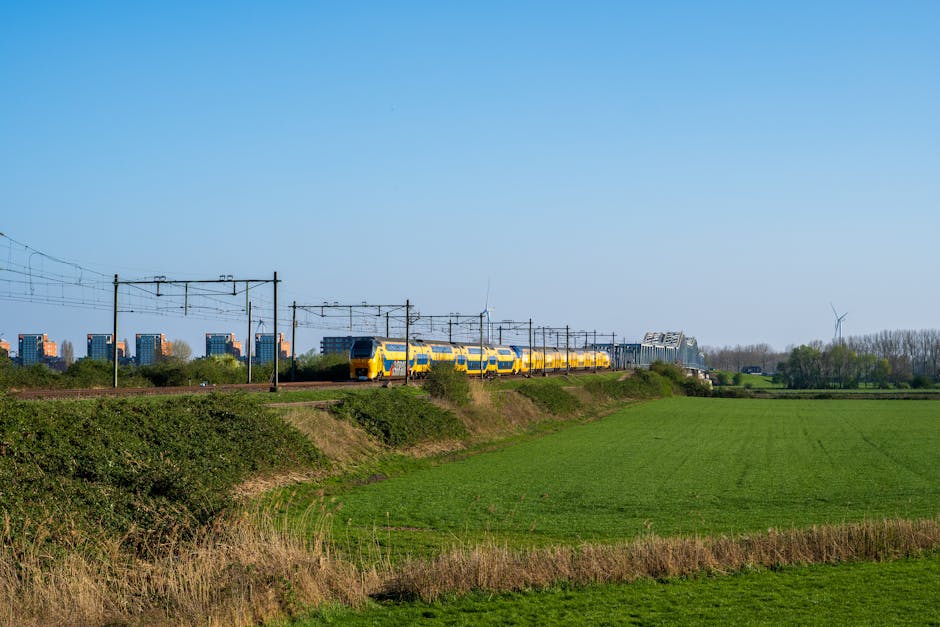
The resurgence of night trains, or sleeper services, has altered the calculus of a train tour of Europe from the UK. These services allow travelers to cover vast distances—such as Brussels to Berlin or Vienna—while eliminating the cost of a hotel night. The market leader is ÖBB (Austrian Federal Railways) with its Nightjet brand. These trains offer three levels of service: Seating carriages (most economical), Couchettes (4-6 bunks per compartment, ideal for groups/families), and Sleeper cabins (1-3 beds with washbasins, some with en-suite showers).
Newer entrants like “European Sleeper” have filled critical gaps, such as the direct link from Brussels and Amsterdam to Berlin and Prague. For a UK-based traveler, this is particularly advantageous. One can depart London on a late afternoon Eurostar, dine in Brussels, and board a sleeper train at 19:00 or 20:00, waking up in Berlin the following morning. This effectively bypasses the need for a full day of daytime travel through the Ruhr valley. However, demand for these services is high, and booking 4-6 months in advance is often necessary to secure a private sleeper cabin.
Sleeper Service Comparison
- ÖBB Nightjet: Extensive network; high reliability; New Generation trains feature “Mini Cabins” for solo travelers (pod-style).
- European Sleeper: Private operator; routes include Brussels-Amsterdam-Berlin-Prague; focuses on the “Good Night Train” experience.
- Intercités de Nuit (SNCF): Domestic French routes; connects Paris to the Pyrenees and the Alps; primarily couchette and seating only.
- Prices: A couchette berth typically starts at €50-€70, while private sleepers range from €120 to €250 depending on the route and booking lead time.
The success of a rail tour originating in the UK is predicated on a cold assessment of the available infrastructure. By utilizing the Eurostar as a foundation and selecting the appropriate ticketing model—whether the flexible Interrail pass or strategic advance singles—travelers can navigate the continent with a level of precision that rivals short-haul aviation. The integration of high-speed corridors in the west with the revitalized sleeper networks in the east provides a comprehensive framework for exploring Europe without the logistical friction of airport transfers and security queues. As the network continues to expand and liberalize, the data suggests that rail will remain the most time-efficient and environmentally responsible method for multi-country European transit.