I remember the first time I stepped off the plane in Colombo; the humidity hit me like a warm, damp blanket, and the air smelled faintly of cinnamon and diesel. It’s a sensory overload that never quite lets up, but after spending months traversing this island on everything from rickety third-class trains to rented scooters, I’ve realized that Sri Lanka is perhaps the most approachable gateway to South Asia for budget travelers. It offers the chaos of India but at a much more manageable volume, paired with some of the best surf breaks and mountain vistas in the world. If you are planning a trip for 2024, the landscape has shifted slightly post-economic crisis, making local knowledge more valuable than ever.
What is the best backpacking route through Sri Lanka?
Most travelers have about two to three weeks, which is just enough time to scratch the surface of the island’s diverse geography. I usually recommend starting with the “Cultural Triangle” before heading into the hill country and finishing on the coast. It’s a logical loop that minimizes backtracking, which is essential given that travel speeds here rarely exceed 30 kilometers per hour. You’ll likely start in Negombo rather than Colombo—it’s closer to the airport and much easier to navigate for your first few nights.
From Negombo, head north to Sigiriya. This is your base for the ancient ruins. Instead of paying the $30 USD entrance fee for Sigiriya Rock (Lion’s Rock), I prefer hiking Pidurangala Rock. It costs about 1,000 LKR (roughly $3 USD), and the view from the top includes the iconic Lion’s Rock itself. It’s a win-win for your wallet and your photo gallery. Spend two nights here, then take a bus to Kandy. Kandy is the gateway to the mountains, but don’t linger too long—the real magic happens once you get on the train toward Ella.
The Kandy to Ella train is frequently cited as the most beautiful rail journey in the world. While it is stunning, it has become incredibly crowded. My advice? Don’t stress about first-class AC seats. You can’t open the windows there. Aim for second or third class unreserved. It’s where the locals sit, the windows stay open for photos, and the tickets cost less than $2 USD. After Ella, drop down to the south coast for beaches like Hiriketiya or Weligama. If you have a fourth week, head east to Arugam Bay, especially if you are visiting between May and September when the surf is world-class on that side of the island.
Suggested 21-Day Itinerary Breakdown
- Days 1-2: Negombo (Recovery and SIM card setup)
- Days 3-5: Sigiriya & Dambulla (Temples and rocks)
- Days 6-7: Kandy (Temple of the Tooth and lake walks)
- Days 8-12: Ella & Nuwara Eliya (Tea plantations and hiking)
- Days 13-15: Udawalawe or Yala (Safari for elephants and leopards)
- Days 16-21: South Coast (Hiriketiya, Mirissa, and Galle Fort)
How much does it cost to backpack Sri Lanka in 2024?
Sri Lanka remains an incredibly affordable destination, though inflation has pushed prices up from the pre-2022 era. You can still comfortably get by on $30 to $40 USD per day if you are staying in hostel dorms and eating at local “hotels” (which are actually small restaurants). If you want private rooms in boutique guesthouses and a few more western-style meals, bump that budget to $60 USD. It’s a flexible destination where your money can go a long way if you make smart choices about transport and food.
Accommodation prices vary wildly by region. In Ella or Mirissa, a decent dorm bed will set you back about $10-$15 USD. In less touristy spots, you can find simple double rooms for that same price. Food is where you can save the most. A massive plate of vegetable rice and curry at a local spot costs around 600-900 LKR ($2-$3 USD), and it’s usually the best food you’ll eat all day. Alcohol, however, is relatively expensive due to high taxes. A large Lion Lager at a beach bar will cost you about $4-$5 USD, which can quickly eat into a daily budget.
| Expense Item | Budget Price (LKR) | USD Equivalent (Approx) | Notes |
|---|---|---|---|
| Dorm Bed | 3,000 – 4,500 | $10 – $15 | Cheaper in the north/center |
| Local Meal (Rice & Curry) | 700 – 1,200 | $2.30 – $4 | Usually all-you-can-eat refills |
| Train Ticket (2nd Class) | 500 – 1,000 | $1.60 – $3.30 | Long distance (e.g., Kandy to Ella) |
| Tuk-Tuk (5km ride) | 800 – 1,200 | $2.60 – $4 | Always negotiate or use PickMe |
| National Park Entrance | 8,000 – 12,000 | $26 – $40 | Includes jeep and fees; varies by park |
What are the essential transportation options for budget travelers?
Transportation in Sri Lanka is an adventure in itself. You have three primary modes: the government buses (the “red buses”), the train network, and tuk-tuks. Buses are the backbone of the country. They go everywhere, they are incredibly cheap (usually less than $1 for a 3-hour journey), and they are terrifying. Drivers treat the narrow mountain roads like a Formula 1 circuit. If you’re prone to motion sickness, sit near the front and keep your eyes on the horizon. Don’t worry about schedules; just show up at a bus stand and shout your destination; someone will point you to the right vibrating metal box.
For a more relaxed experience, use the trains. I highly recommend booking your long-distance tickets in advance through platforms like 12Go.asia or Bookaway if you want a reserved seat. These seats sell out weeks in advance. If you miss out, don’t panic. Unreserved tickets are always available on the day of travel; you just might have to stand for a few hours. Pro tip: if you’re traveling from Kandy to Ella, try to get a seat on the right side of the train for the best views of the tea estates.
Within cities and for short hops between beach towns, tuk-tuks are king. However, tourists are often quoted “special” prices. Download the PickMe app (Sri Lanka’s version of Uber). It works in Colombo, Kandy, and increasingly in the south. Even if you don’t use it to book, use it to check the fair price for a route so you have leverage when negotiating with a driver on the street. For total freedom, many backpackers are now renting their own tuk-tuks. Companies like Tuk Tuk Rental allow you to rent a vehicle for about $18-$25 per day. They even help you get the local driving permit. It is, without a doubt, the most fun way to see the island, though driving in Sri Lankan traffic requires nerves of steel.
Always carry small denominations of Sri Lankan Rupees. Many bus conductors and tuk-tuk drivers will claim they don’t have change for a 5,000 LKR note, effectively forcing a “tip.” Break your big notes at supermarkets like Keells or Cargills Food City.
Where are the best surf and beach spots for backpackers?
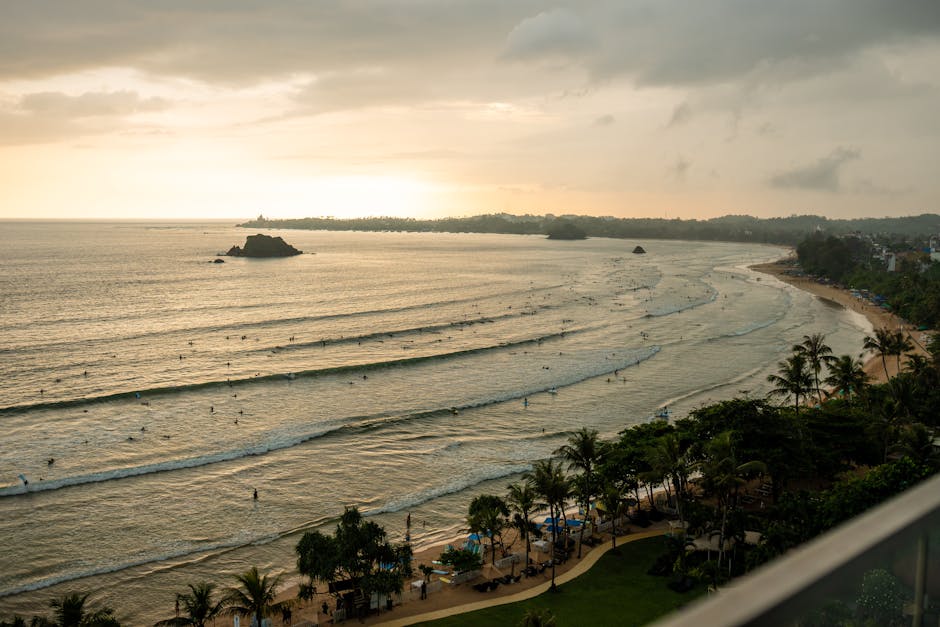
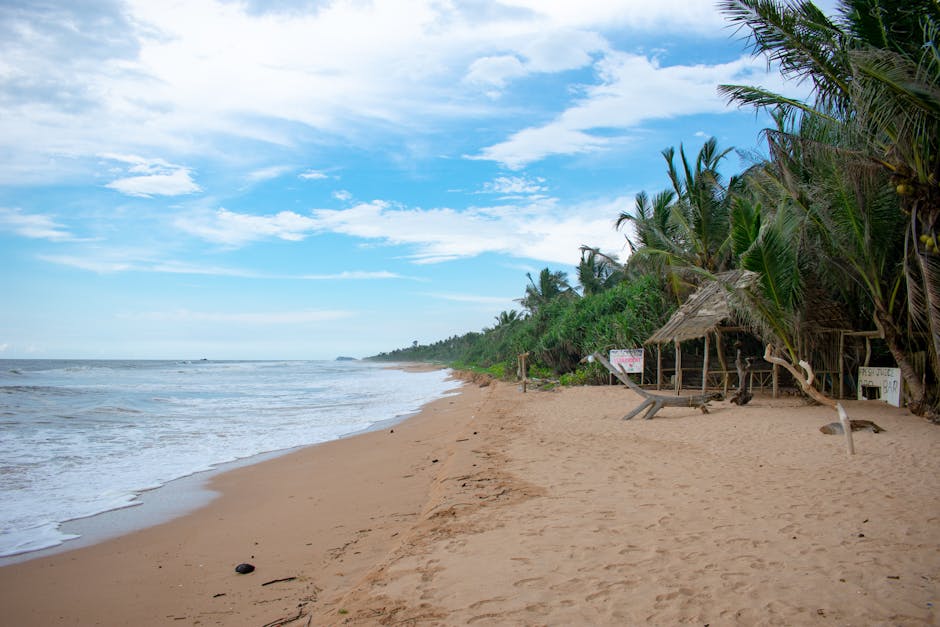
The coastline of Sri Lanka is divided by the monsoons. From November to April, the South and West coasts are prime. From May to October, the East Coast shines. If you’re a surfer or just someone who wants a social atmosphere, Hiriketiya is the current “it” spot. It’s a horseshoe-shaped bay with a jungle backdrop and a mix of beginner-friendly waves and a more advanced point break. It’s slightly more expensive than neighbouring towns, but the vibe is unbeatable. Stay at Dots Bay House if you want to be in the center of the action, though it can get noisy.
If you want something quieter, head to Dikwella or Talalla. These beaches are just a few kilometers from Hiriketiya but feel worlds apart. For those looking to learn to surf, Weligama is the place. The entire beach is a sandy-bottom break, making it very safe for beginners. You can get a board rental and a two-hour lesson for about $10-$15 USD. It’s a bit of a concrete jungle compared to other spots, but the sheer number of hostels makes it the easiest place to meet people as a solo traveler.
On the East Coast, Arugam Bay is the legendary surf mecca. It’s a long haul to get there (about 7-9 hours from Colombo), but it’s worth it. The town has a very distinct, laid-back character that revolves entirely around the swell. Even if you don’t surf, the proximity to Kumana National Park makes it a great base for wildlife spotting without the crowds of Yala. Just be aware that during the off-season (November to March), Arugam Bay almost completely shuts down, and many restaurants and guest houses will be closed.
What should you pack for a multi-climate Sri Lankan trip?
The biggest packing mistake people make is only preparing for the beach. If you head to Nuwara Eliya or Ella, the temperature can drop to 10°C (50°F) at night, especially during the winter months. You need layers. I’ve seen many shivering backpackers forced to buy overpriced, itchy wool sweaters in Kandy because they only packed linen shirts and bikinis. A lightweight down jacket or a decent fleece is a must if you plan on doing the 2:00 AM hike up Adam’s Peak.
In terms of gear, I swear by the Osprey Farpoint 40 ($185). It’s carry-on sized for most airlines, which saves you baggage fees and the headache of waiting at carousels. The suspension system is comfortable enough for 20-minute walks to guesthouses, and the front-loading design means you don’t have to dig through everything to find a clean pair of socks. One downside is that it lacks a dedicated water bottle pocket that fits larger flasks, but the durability is top-tier. I’ve dragged mine through dusty bus floors for three years and it’s still holding up.
Another essential is a high-quality water filtration bottle. Tap water in Sri Lanka is generally not safe for travelers, and the plastic waste from buying 1.5-liter bottles is heartbreaking. I use the Grayl Geopress ($100). It’s a bit heavy and the replacement filters are pricey ($30), but it allows you to press almost any freshwater source into clean drinking water in seconds. It filters out viruses, which most standard filters like LifeStraw do not. Over a three-week trip, it pays for itself in the money you save on bottled water.
Pack List Essentials
- Clothing: 5x breathable T-shirts, 1x lightweight fleece, 2x pairs of linen trousers (essential for temples), 1x raincoat.
- Footwear: 1x pair of sturdy trail runners (for Ella Rock/Adam’s Peak), 1x pair of flip-flops.
- Health: Reef-safe sunscreen (expensive to buy locally), DEET-free mosquito repellent, and a basic first-aid kit with rehydration salts.
- Tech: A 20,000mAh power bank. Power outages are less frequent now than in 2022, but still happen, and long bus rides will drain your phone.
What are the cultural etiquette and safety tips for solo travelers?
Sri Lanka is generally very safe, but it is a conservative country. This is something I see backpackers get wrong constantly. When visiting temples—including the grounds of Sigiriya or the Temple of the Tooth in Kandy—you must cover your shoulders and knees. This applies to everyone, regardless of gender. I always carry a lightweight sarong in my daypack; it’s a towel, a beach blanket, and a temple-appropriate skirt all in one. Also, never take a photo with your back turned to a statue of the Buddha. It’s considered deeply disrespectful and can actually get you into legal trouble or at least a very stern lecture from locals.
For solo female travelers, Sri Lanka is manageable but requires some awareness. You might experience “staring,” which is often more curiosity than malice, but it can be uncomfortable. I’ve found that traveling in the women’s-only sections of trains or sitting near families on buses helps minimize unwanted attention. Avoid walking alone on deserted beaches or unlit streets at night, particularly in the south coast party hubs where alcohol-fueled incidents are more common. Most guesthouses are family-run, and the owners usually look out for their guests like their own children; don’t be afraid to ask them for advice on local safety.
Finally, let’s talk about the “teardrop” scams. If a friendly local approaches you near a tourist site claiming the temple is closed for a festival or offering a “free” tour of a spice garden, be skeptical. These spice gardens are notorious for high-pressure sales tactics where they sell basic oils for 10x the market price. Enjoy the local hospitality—it’s some of the best in the world—but maintain a healthy level of skepticism if someone seems overly eager to redirect your plans. If you stay respectful, dress appropriately, and keep your wits about you, you’ll find that the people here are the highlight of the trip, far more than the scenery itself.