
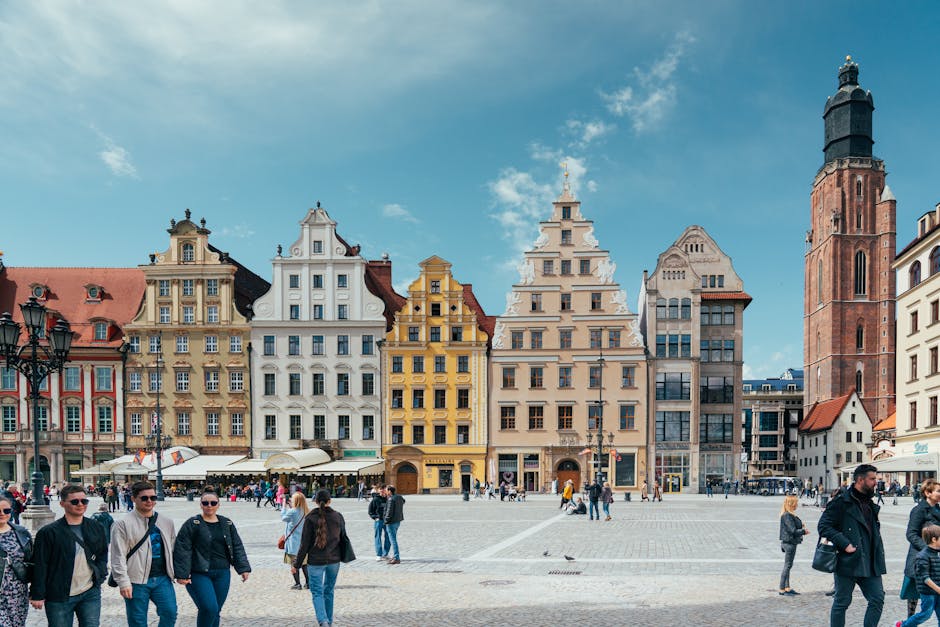
Imagine you are sitting in a small café in Warsaw’s Praga district. The smell of fresh zapiekanka is in the air, and you’ve just realized your remote work contract allows you to stay here for six months. But then, the reality of the Schengen Zone hits. You start scrolling through the official government portals, only to find a labyrinth of terms like ‘Annex II,’ ‘D-type national visa,’ and ‘Voivodeship invitation.’ Navigating the visa requirements for Poland isn’t just about filling out a form; it is an exercise in understanding the specific administrative philosophy of a country that sits at the crossroads of Western Europe and the East.
Poland has become an increasingly popular destination for digital nomads, tech professionals, and students. However, the entry requirements have tightened and shifted throughout 2024. Whether you are coming for a short-term city break or planning a long-term relocation, the documentation you provide must be precise. The Polish border guard (Straż Graniczna) is known for being meticulous. A single missing document or an insurance policy that lacks the specific ‘repatriation of remains’ clause can result in a quick denial at the consulate or, worse, a stressful encounter at the border in Warsaw Chopin Airport.
Who needs a visa for Poland under current Schengen Zone regulations?
The first step in any Polish immigration journey is determining your classification. Poland is a member of the Schengen Area, which means it follows the unified visa policy of the European Union for short-term stays. However, Poland maintains its own distinct rules for long-term stays (over 90 days). The distinction between these two categories is where most travelers encounter their first hurdle. If your passport is from a ‘visa-waiver’ country, you have a significant advantage, but that advantage comes with strict temporal boundaries.
Short-term stays and the 90/180 rule
For citizens of countries like the United States, Canada, the United Kingdom, Australia, and Japan, entry into Poland for tourism or business is relatively seamless. These travelers fall under the Annex II category. You do not need a visa for stays up to 90 days within any 180-day period. It sounds simple, but the calculation is rolling. If you spent 30 days in France and 30 days in Germany before arriving in Poland, you only have 30 days left in your ‘Schengen bank.’
The 90/180 rule is non-negotiable. Overstaying by even a single day can result in a fine, a formal deportation order, and a ban from the entire Schengen Area ranging from six months to three years.
The ETIAS transition and future requirements
While 2024 remains a transition year, travelers from visa-waiver countries must prepare for the ETIAS (European Travel Information and Authorisation System). Although the full implementation has been delayed into 2025, the groundwork is already affecting how Polish consulates handle inquiries. Once active, this will be a mandatory electronic authorization linked to your passport. For now, ensure your passport has at least three months of validity beyond your intended departure date and at least two blank pages.
Citizens of non-exempt countries
If you are a citizen of a country not on the visa-waiver list (such as India, China, Turkey, or the Philippines), you must apply for a C-type Schengen Visa. This process requires an appointment at a Polish consulate or a VFS Global center. The documentation burden here is high. You will need to provide proof of accommodation (confirmed hotel bookings), a detailed flight itinerary, and proof of sufficient financial means. In 2024, the daily minimum for a short-term stay in Poland is approximately 75 PLN per day if your stay exceeds 4 days, with a minimum of 300 PLN for shorter stays. However, if your accommodation is not pre-paid, these requirements increase significantly.
What are the specific requirements for a Polish National D-type visa?
When your plans in Poland exceed the 90-day mark, the Schengen visa is no longer applicable. You must apply for a National D-type visa. This is a long-stay visa valid for up to one year. It allows you to stay in Poland for the duration of the visa and travel within the rest of the Schengen Area for up to 90 days in any 180-day period. The ‘D-type’ is the primary vehicle for workers, students, and those seeking to join family.
Work-related visa pathways
Poland offers several types of work permits, and the visa you receive is tied directly to the permit your employer secures for you. The most common is the ‘Oświadczenie’ (Declaration of Entrusting Work), which is available to citizens of Armenia, Belarus, Georgia, Moldova, and Ukraine. For others, the ‘Zezwolenie na pracę’ (Work Permit Type A) is the standard. To obtain a D-type visa for work, you must present the original permit issued by the Voivodeship office (Urząd Wojewódzki). Photocopies are generally rejected. The permit must state your specific employer, your position, and your salary, which must meet the national minimum wage (currently 4,242 PLN gross as of early 2024, rising again in July).
Student and research visas
For students, the Polish D-type visa requires an official acceptance letter from a recognized Polish university. The ‘Deep Researcher’ perspective notes a common pitfall here: the university must be approved by the Ministry of the Interior to host international students. Not all private language schools qualify. You will also need to prove you have enough funds to cover your tuition and your living expenses for the entire year. This is usually demonstrated through a bank statement showing a balance of at least 10,000 PLN to 15,000 PLN, plus the cost of a return ticket to your home country.
Digital Nomads and the ‘Business Harbour’ status
Poland famously launched the ‘Poland. Business Harbour’ program to attract IT professionals. However, as of early 2024, this program has undergone significant changes and suspensions in certain regions due to policy reviews. For freelancers and digital nomads from non-EU countries, the ‘Individual Business Activity’ visa is the current alternative. This requires you to register a business in Poland (JDG – Jednoosobowa Działalność Gospodarcza). It is a complex route that involves obtaining a PESEL number and registering with the Social Insurance Institution (ZUS). It is not a path for the casual traveler; it is a commitment to the Polish tax system.
| Visa Category | Primary Requirement | Max Duration | Key Benefit |
|---|---|---|---|
| Schengen C-Type | Tourism/Business proof | 90 days | Access to 27 countries |
| National D-Type | Work/Study permit | 1 year | Right to reside in Poland |
| Karta Pobytu | Local residence application | 1–3 years | Work without extra permits |
How to navigate the Polish temporary residence permit (Karta Pobytu) application
If you intend to stay in Poland for several years, the D-type visa is merely a stepping stone. Most expats transition to a ‘Karta Pobytu’ (Temporary Residence Card). This process takes place inside Poland at the local Voivodeship office. It is notorious for its long wait times—sometimes stretching from six months to over a year in busy hubs like Warsaw, Wrocław, or Gdańsk. The moment you submit your application, your passport receives a stamp (Stempel). This stamp allows you to remain in Poland legally even if your original visa expires while you wait for a decision.
The ‘Stempel’ and travel limitations
There is a critical nuance that many expats miss: the stamp in your passport only makes your stay legal in Poland. It does not grant you the right to travel to other Schengen countries if your original visa has expired. If you are caught in Germany or Italy with only a Polish application stamp, you are considered to be staying illegally in the Schengen Zone. You can leave Poland to return to your home country, but you cannot re-enter Poland without a valid visa until your Karta Pobytu is issued.
Documentation for the residence card
The application for a residence card requires a mountain of paperwork. You will need the ‘Załącznik nr 1’ (Annex 1) filled out by your employer, proof of health insurance, and a rental agreement (Umowa najmu). In 2024, officials have become stricter regarding ‘stable and regular income.’ You must demonstrate that your income is enough to support yourself and any dependents without relying on Polish social assistance. For a single person, this is currently a net income of at least 776 PLN per month after housing costs, though in practice, consulates look for much higher figures to ensure stability.
- Health Insurance: Must be ZUS (state insurance) or a private policy with a minimum coverage of €30,000 that includes hospitalization.
- Housing: The rental contract must cover the entire period of your requested stay or at least the first several months.
- Photos: Four recent biometric photos (35mm x 45mm) taken in the last six months.
- Fees: The administrative fee for a temporary residence permit is 440 PLN, plus 100 PLN for the card itself once approved.
What are the logistical costs and processing times for Polish visas in 2024?

Budgeting for a Polish visa involves more than just the sticker price of the visa itself. There are hidden costs associated with document preparation that can catch the unprepared traveler off guard. Polish authorities require that any document not in Polish or English be translated by a ‘Sworn Translator’ (Tłumacz Przysięgły) registered with the Polish Ministry of Justice. Standard translations from your home country are often rejected unless they carry an Apostille, and even then, a local sworn translation is preferred.
Consular and Service Fees
As of 2024, the standard fee for a National D-type visa is approximately €80 to €135, depending on the specific bilateral agreements between Poland and your home country. If you apply through VFS Global, expect an additional service fee of €15 to €30. These fees are non-refundable, even if your visa is denied. The payment is usually required in the local currency of the application center at the day’s exchange rate.
Processing timeframes and seasonal delays
The official processing time for a Polish visa is 15 calendar days. However, this is a baseline. During the peak student season (July to September) or the pre-winter work influx, wait times can expand to 30 or even 60 days. The ‘Deep Researcher’ advice here is to monitor the ‘E-konsulat’ system religiously. Appointments are released at specific times (often at the start of the week or month), and they disappear within minutes. Some applicants resort to using ‘bots’ or agencies to secure slots, a practice the Polish government is actively trying to crack down on by implementing more robust identity verification steps.
Common reasons for visa denials
Why do Polish visas get rejected? Analyzing recent data suggests three main culprits. First is ‘insufficient justification for the purpose of stay.’ If you are applying for a work visa but your employer is a shell company with no physical office, the consulate will flag it. Second is ‘unreliable documentation regarding financial means.’ Using a bank statement from a relative without a formal notarized letter of support is a frequent error. Finally, ‘doubtful intention to leave the territory.’ This applies primarily to Schengen C-type visas. If you cannot prove strong ties to your home country (like a job, property, or family), the officer may suspect you intend to stay in Poland illegally.
The administrative landscape of Poland is rigorous, but it is also predictable if you follow the rules to the letter. The country is transitioning toward a more digital-first approach, but for now, the physical paper document remains king. Whether you are chasing the historic charm of Kraków or the burgeoning tech scene of Wrocław, your entry into this vibrant EU member state begins long before you pack your bags. It begins with a meticulous folder of documents, a clear understanding of the 90/180 rule, and the patience to navigate the Voivodeship corridors. Poland is worth the effort, but the bureaucracy demands respect. Ensure your paperwork is as solid as the bricks of Wawel Castle, and your transition into Polish life will be far smoother.